
Last Updated:
August 17th, 2026
We don’t always stop to weigh up the risks when mixing prescription medication and alcohol. We might feel like a drug has completely left our system, and pay no mind to having a drink once we feel like it has cleared. Yet the consequences can be much more severe than we first imagine.
Amitriptyline is one such drug where alcohol’s influence can raise the risks to a life-threatening level.
We’re looking at some of the reasons alcohol and amitriptyline are mixed, as well as the often-overlooked dangers of combining the two.
What is amitriptyline and why is it prescribed?
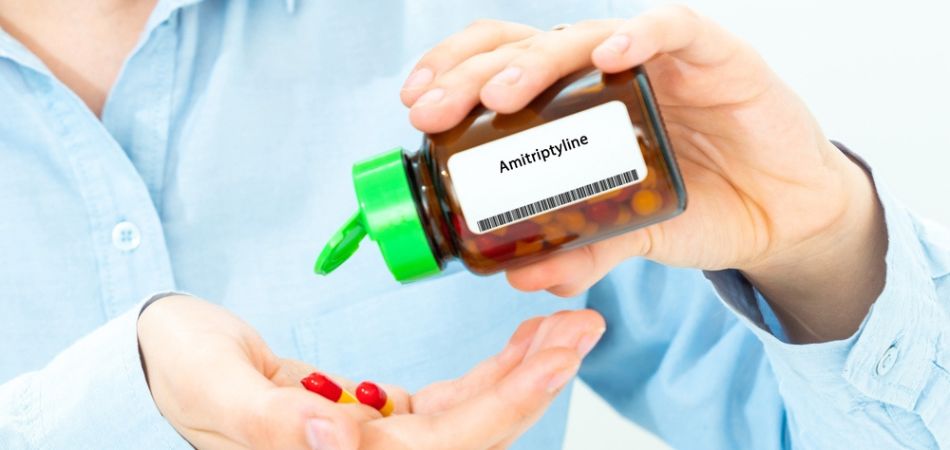
Amitriptyline is a type of antidepressant classified as a tricyclic antidepressant (TCA). Though older than many of today’s selective serotonin reuptake inhibitors (SSRIs), it is still widely prescribed in the UK for a host of mental health conditions. Beyond its use in treating depression, amitriptyline is sometimes prescribed at lower doses for chronic pain, nerve pain, and migraine prevention.
The drug works by increasing the levels of serotonin and noradrenaline in the brain, which are two neurotransmitters that play a role in stabilising mood and regulating pain perception. While the efficacy of amitriptyline as an antidepressant is widely researched, it is also known for producing stronger sedative effects than many newer antidepressants.
Its sedative qualities can be helpful for people experiencing insomnia alongside depression, but they also make the drug especially risky when combined with other substances, like alcohol.
Why might amitriptyline be mixed with alcohol?
Despite the warning pamphlets and labelling, many people still drink while under the effects of amitriptyline. The reasons are varied, and might include:
- Overlooking the interaction risks: Not everyone understands that alcohol can amplify amitriptyline’s sedative effects to a dangerous level. As alcohol is such a prevalent substance in our daily lives, the danger of combining it with medication is often underestimated.
- Using alcohol to self-medicate while on antidepressants: A person could be battling with depression and be prescribed an antidepressant like amitriptyline. They may be told to give enough time for it to work, which the NHS states is between 2 and 6 weeks. At this time, alcohol may still appear as an escape from anxiety and worry, though it is only short-lived and will quickly undermine the treatment.
- Seeking stronger calming or numbing effects: Most people are advised to take amitriptyline a few hours before bed, due to its side effects of drowsiness and sedation. These effects will be amplified by alcohol, and some people may deliberately seek a heightened sense of relaxation.
What are the dangers of mixing amitriptyline and alcohol?
The combination of alcohol and amitriptyline can create a range of risks, many of them serious and sometimes life-threatening. Some signs may manifest subtly, but can start to escalate at an alarming rate, including:
Can mixing lead to addiction or dependence?
Aside from the immediate health risks stemming from mixing the two, both substances can lead someone into repeated misuse and, eventually, dependence. Alcohol itself is already highly addictive, and using it to “boost” or balance the effects of amitriptyline will quickly spiral into reliance.
Amitriptyline is not considered addictive in the same way as alcohol, but the NHS states that you can experience extra side effects if you stop taking it suddenly. This can include flu-like symptoms and bodily pains. This is why most doctors recommend reducing the dose gradually. There may be urges to use amitriptyline again to stop symptoms of nausea and sleep disruptions.
If alcohol is frequently mixed with amitriptyline, your body can become accustomed to this vicious cycle of symptoms, entrenching both alcohol dependence and the misuse of prescribed medication.
How can I stop mixing amitriptyline and alcohol safely?
There are a few measured steps you can take to ensure you cease using either substance safely:
- Speak with your GP or prescribing doctor first: Regular use of amitriptyline should never be stopped suddenly, without medical support. Speak with your doctor to make sure you stop taking it safely and whether tapering is needed. They can adjust your prescription and support you with alternative medications when you need them.
- Be honest about alcohol use: Especially as we grow older, it is common to downplay how much we drink to friends, family, and people who have our best interests at heart. However, if the problem is getting worse, being open will provide a clearer picture for those who help you. Your honesty will be directly linked to the accuracy of your treatment.
- Develop healthier coping strategies: At times, almost every person has used alcohol as a way to escape stress or an uncomfortable situation. However, it will become increasingly important to recognise the value of healthier and constructive coping mechanisms. Mindfulness, journaling, exercise or therapy can become areas you focus on when urges to drink get stronger. Each can help you manage your emotions without relying on the effects of substances.
- Look into professional detox: For people who have developed a long-standing alcohol dependence, trying to go it alone and stop at home can be dangerous. A professional detox programme should be used to mitigate uncomfortable withdrawal symptoms and manage any complications. If urges and cravings grow stronger, aftercare systems and support networks can become a lifeline in sober living.
Stopping the mix of these two substances is as much about regaining control of your life as it is about avoiding harmful interactions. It may be the right time to reach out for support and prioritise your mental and physical well-being.
Where can I find help for my addiction?
If you’re finding it hard to stop drinking, with or without the use of other drugs, please remember that you don’t have to go through this alone. Millions of people are helped each year to escape the clutches of addiction through professional rehab.
At Liberty House, we specialise in medically-assisted detox that helps you manage and safely overcome withdrawal symptoms. We employ evidence-based therapies that help you address and then reframe the drivers of addictive behaviours. Our aftercare systems then help you stay committed to lifelong sobriety.
Reach out to us today. The first step towards recovery could be the most important decision you ever make.
(Click here to see works cited)
- NHS Choices, NHS, www.nhs.uk/medicines/amitriptyline-for-depression/about-amitriptyline-for-depression
- “Amitriptyline for Sleep, Is It a Bad Idea?” Sleepstation, 6 Dec. 2021, www.sleepstation.org.uk/articles/medicines/amitriptyline/.
- Thour A, Marwaha R. Amitriptyline. [Updated 2023 Jul 18]. In: StatPearls [Internet]. Treasure Island (FL): StatPearls Publishing; 2025 Jan-. Available from: https://www.ncbi.nlm.nih.gov/books/NBK537225/
- Rajaratnam A. Amitriptyline overdose-an uncommon cause of acute transient exotropia presenting to the emergency setting: a case report. J Med Case Rep. 2023 Sep 8;17(1):335. doi: 10.1186/s13256-023-04057-y. PMID: 37679834; PMCID: PMC10485929.
- NHS Choices, NHS, www.nhs.uk/medicines/amitriptyline-for-pain/common-questions-about-amitriptyline-for-pain-and-migraine