



Last Updated:
January 19th, 2026
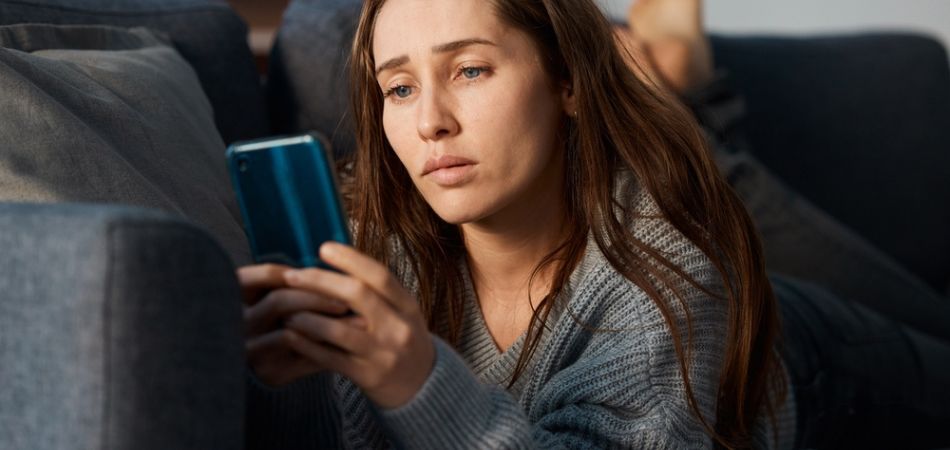
Messaging, calling, or posting while drinking is becoming an increasing problem across the country. People find themselves saying things online they’d never express while sober, and what once lived only in our private thoughts now ends up on platforms with consequences we can’t control.
It’s a problem we never faced before the digital age. Alcohol blurs our judgement long enough for a message, social media post or phone call to irrevocably reshape our lives forever, so what can be done about it?
The omnipresence of social media
It almost feels unheard of to meet a person who doesn’t use social media. Nearly 79% of all adults (55 million people) have at least one account, and this number is expected to rise as younger generations age into adulthood. With so many platforms competing for our attention, we’re seeing increasing numbers of social media compulsive use, where looking for notifications becomes automatic.
Social media used to be viewed as an extra way to stay connected with people. Now, it’s a ubiquitous tool for modern life, which is always on, following us as we meet with loved ones. Social media is constant, immediate, and only ever one thumb-flick away. It lies waiting in perfect conditions for impulsive and unrestricted communication.
And the generation who once held reservations about constantly being online is slowly giving way to another, for whom social media has always been stitched into the fabric of life. Therefore, we are seeing increasing activities online where impulses, emotions and instant communication collide, the perfect setup for drunk texting.
How big is the problem of drunk texting?
Broadly speaking, before we had the option of immediately contacting our entire phonebook, there was a clearer line between “thinking it” and “texting it.” We couldn’t directly message people across multiple platforms while out having a drink. For some, the pattern is becoming so repetitive that it forms a drunk texting addiction, where the urge to send messages while drinking feels compulsive instead of accidental.
The rise of drunk texting is not insignificant; it has become a behavioural pattern that is gaining research interest across academic and professional circles. One study looking at alcohol use among U.S. college students found that almost half of them “shared alcohol posts,” and 20% reported drunk texting at least once per month.
Another survey conducted with a small sample of social media users showed that 75.8% made a call while drunk, while more than a third of them regretted it later. Further research from Frontiers in Psychology found that getting more likes on your social media post while drunk made people more likely to increase alcohol consumption.
Our digital behaviours don’t pause when we drink. Instead, it seems we are becoming more impulsive, leading to brash decisions and regretful choices.
Why does alcohol make us more likely to send embarrassing texts?
Some of the biggest psychological and neurological reasons alcohol pushes us toward impulsive communication are:
One of alcohol’s strongest neurological effects is its suppression of the prefrontal cortex. This part of the brain is responsible for judgement, impulse control and weighing up consequences. As inhibition drops, the mental filter that normally stops you from taking action is cast to the wayside. Drinking more means it’s easier to give in to the emotional impulses you would likely hold back if you were sober.
Is drunk texting a byproduct of our increasingly anxious culture?
In many ways, we could consider that an increase in drunk texting is at least partially linked to our growing inability to control or express our emotions without alcohol.
Research from the Office for National Statistics suggests that almost a quarter of all people in the country have “high levels of anxiety.” More people than ever feel like they can’t open up to friends or talk to someone they find attractive without a little bit of Dutch courage.
Alcohol becomes our shortcut to feeling relaxed. We tell ourselves that it loosens our pressure valve, so we get a fleeting sense of boldness we couldn’t access while sober. If our culture really is growing more anxious, we might see drunk texting as a safer way to express ourselves. This shouldn’t be the case, as it is clearly a temporary escape from a deeper issue that needs addressing.
The emotions we are trying to outrun are only likely to get worse if we use alcohol as a key. Drunk texting may reflect something within us that feels unsettled that we are trying to express. The consequences, however, will only create new problems to deal with the next morning.
What steps can I take if drunk texting is causing me problems?
If alcohol keeps steering your phone into situations you regret the next morning, it’s a sign the behaviour deserves attention. Alcohol and impulsive behaviour are heavily linked, but you can take a few intentional steps before acting brashly. Try these:
- Examine your drinking habits and look for patterns: Pay attention to when drunk texting tends to happen. Is it after a certain number of drinks, at specific venues or only when particular emotions surface? Spotting patterns helps you intervene earlier.
- Ask a friend to help: Let a trusted friend know you’re trying to avoid drunk texting. They can give you a gentle nudge, distract you when you’re tempted or help you leave a situation before things escalate.
- Change some of your phone settings: Use built-in features like app timers, Do Not Disturb modes or text-delay apps. A few extra digital barriers can give you the breathing space you need to reconsider sending a message.
- Keep your phone out of sight: If your phone isn’t in your hand, you’re less likely to act impulsively. Leave it in your coat, bag or with a friend when you sense your judgement slipping.
- Reach out to professionals for alcohol support: If drunk texting is part of a wider struggle with alcohol or emotional regulation, speaking to a GP or addiction specialist can help you understand the root causes and build healthier coping strategies.
Where can I get help for my alcohol addiction?
If drunk texting is becoming a pattern that leaves you anxious or embarrassed, you don’t have to handle it alone. Alcohol lowers inhibitions by design, but that doesn’t mean it should control the way you navigate your relationships.
At Liberty House, we support people who feel their drinking habits are starting to take a toll on their emotional wellbeing, digital behaviour or daily life. We specialise in medical alcohol detox, behavioral addiction support and tailored aftercare to help you develop healthier coping mechanisms.
Reach out today for support in breaking free from alcohol addiction and stepping towards a brighter, sober future.
(Click here to see works cited)
- Kemp, Simon. “Digital 2025: The United Kingdom – DataReportal – Global Digital Insights.” DataReportal, DataReportal – Global Digital Insights, 25 Feb. 2025, datareportal.com/reports/digital-2025-united-kingdom.
- Perez MAG, Lerma M, Torres J, Cooper TV. Posting Alcohol-Related Content and Texting Under the Influence Among Hispanic College Students. J Technol Behav Sci. 2021;6(4):589-598. doi: 10.1007/s41347-021-00211-9. Epub 2021 May 28. PMID: 34095459; PMCID: PMC8163363.
- R, Manohar. “Alcohol’s Damaging Effects on Brain & Behaviour.” Deccan Herald, www.deccanherald.com/features/alcohol-s-damaging-effects-on-brain-behaviour-1211416.html
- “Measuring Progress, Well-Being and beyond GDP in the UK: May 2024.” Measuring Progress, Well-Being and beyond GDP in the UK – Office for National Statistics, Office for National Statistics, 8 May 2024, www.ons.gov.uk/peoplepopulationandcommunity/wellbeing/bulletins/measuringprogresswellbeingandbeyondgdpintheuk/may2024.