

Last Updated:
June 3rd, 2026
What ketamine is and what it does to your body
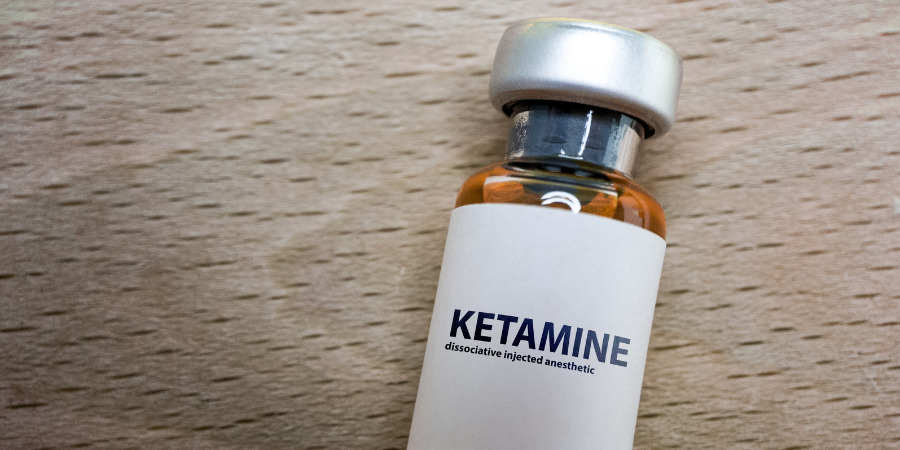
Ketamine is what’s known as a dissociative anaesthetic that was originally developed for surgical use. It’s still used in hospitals for pain relief and sedation, but in recent years it’s also been used in controlled clinical settings to treat severe depression.
But outside of these professional environments, ketamine is one of the most widely used recreational drugs in the UK, especially among younger adults.
The most recent data from ONS estimates that around 2% of 16 to 24-year-olds in England and Wales have used ketamine in the past year.
The drug works by blocking NMDA receptors in the brain, which are part of the system that controls excitatory signaling. This produces the dissociative state that recreational users are looking for, where they feel detached from their body and surroundings. They may also seek the altered perception that ketamine can cause, as well as hallucinations in higher doses.
So, why is all of this relevant to alcohol and ketamine? Interestingly, but equally as worrying, alcohol acts on some of the same brain systems as ketamine. When you mix both alcohol and ketamine together, this is where the danger can start.
Why mixing ketamine with alcohol is dangerous
Both ketamine and alcohol slow down the central nervous system, which controls essential functions like breathing and heart rate. Your body can usually manage either substance on its own. The slowing effects stack on top of each other when the two are combined, becoming unpredictable.
The government’s review of ketamine describes how the combination can lead to prolonged sedation and dangerously slowed breathing.
The dissociative state makes this particularly risky. A person who has taken ketamine may not notice that their breathing has slowed or that something is going wrong, because the drug has disconnected them from the signals their body would normally send. If they’ve also been drinking, the sedation deepens, and the window in which someone nearby might spot the problem gets smaller.
Worrying ketamine and alcohol death statistics
An analysis of 283 recreational ketamine-related deaths in England found that alcohol was present in the post-mortem results of 27% of cases. The researchers pointed out that when ketamine is taken alongside other substances that slow the body down, a lower dose of ketamine may be enough to cause death than when it’s taken on its own.
The vast majority of ketamine-related deaths involve more than one substance, and alcohol is one of the most common ones found alongside it.
What ketamine and alcohol do to your body with continued use
The immediate risks of combining ketamine and alcohol are serious, but regular ketamine use carries its own long-term consequences that are worth understanding separately.
Bladder damage
This is one of the most well-documented effects of regular ketamine use and something that many users don’t find out about until the damage has already started. A survey of over 1,200 recreational ketamine users found that more than a quarter reported at least one urinary symptom, including needing to go to the toilet frequently and pain when urinating, as well as lower abdominal discomfort.
The damage happens because ketamine and its byproducts leave the body through urine. As they pass through the bladder, they irritate and damage the bladder lining. Continued use causes the damage to progress from inflammation to scarring, and in severe cases, the bladder shrinks to a fraction of its normal size. The government’s review states that the most advanced cases require surgical reconstruction.
What makes this particularly worrying is that the damage doesn’t fully reverse when someone stops using. The same survey found that among users who quit ketamine, only half reported any improvement in their symptoms. The other half continued to experience problems even after they stopped.
Liver and kidney strain
Both ketamine and alcohol are processed by the liver, and using them together puts a heavy load on the organ. The combined effects review found evidence from laboratory studies that ketamine and alcohol together produce greater damage to liver cells and kidney function than either substance alone.
How to recognise when someone needs help right now
If you’re with someone who has taken ketamine and alcohol together and something doesn’t look right, knowing what to watch for matters. The signs that need immediate medical attention include:
- Breathing that has become slow or shallow
- Being unable to wake the person
- A blue tinge to their lips
- Vomiting while unconscious
If any of these are present, call 999 immediately. Place the person in the recovery position to keep their airway clear and stay with them while you wait for help. Try to keep them awake and talking if they’re conscious.
Even if the person seems to recover, the combined effects of ketamine and alcohol can fluctuate. Someone who appears to be improving can deteriorate again, so staying with them matters.
What it might mean if this is becoming a pattern
If mixing ketamine and alcohol has become something you do regularly rather than something that happened once, that’s worth paying attention to. The same applies if you’ve noticed that you need more of either substance to feel the same effect or if a night out without one or both feels hard to imagine.
A few questions can help you think about where things stand:
- Are you using ketamine and alcohol together most times you go out?
- Have you noticed that the same amount doesn’t hit the way it used to?
- Do you find it hard to enjoy social situations without one or both?
- Have you continued using despite experiencing physical symptoms like bladder pain or stomach problems?
- Has anyone close to you raised concerns about your use?
Answering yes to any of these is not a diagnosis, but it can signal that your relationship with these substances has moved beyond recreational use into something that may need professional attention.
How Liberty House can help
If you’re concerned about your ketamine or alcohol use, Liberty House provides residential treatment in a supportive environment where you can address both. Our programme includes ketamine or alcohol detox to manage withdrawal safely, followed by evidence-based therapies that help you understand the patterns behind your use and build the skills to move forward without relying on substances.
Whether you’re ready to take that step or you’d prefer to talk it through first, our team is here for that conversation. Contact Liberty House today.
(Click here to see works cited)
- ONS. (2025, December 11). Drug misuse in England and Wales. Ons.gov.uk; Office for National Statistics. https://www.ons.gov.uk/peoplepopulationandcommunity/crimeandjustice/articles/drugmisuseinenglandandwales/yearendingmarch2025
- Kobayashi, N. H. C., Farias, S. V., Luz, D. A., Machado-Ferraro, K. M., Conceição, B. C. da, Silveira, C. C. M. da, Fernandes, L. M. P., Cartágenes, S. de C., Ferreira, V. M. M., Fontes-Júnior, E. A., & Maia, C. do S. F. (2022). Ketamine plus Alcohol: What We Know and What We Can Expect about This. International Journal of Molecular Sciences, 23(14), 7800. https://doi.org/10.3390/ijms23147800
- GOV.UK. (2026, January 28). Ketamine: an updated review of use and harms (accessible). GOV.UK. https://www.gov.uk/government/publications/ketamine-an-updated-review-of-use-and-harms/ketamine-an-updated-review-of-use-and-harms-accessible
- Tandon, M., Pandey, V., Dubey, G., Pandey, C., & Wadhwa, N. (2014). Addition of sub-anaesthetic dose of ketamine reduces gag reflex during propofol based sedation for upper gastrointestinal endoscopy: A prospective randomised double-blind study. Indian Journal of Anaesthesia, 58(4), 436. https://doi.org/10.4103/0019-5049.138981
- Corkery, J. M., Hung, W.-C., Claridge, H., Goodair, C., Copeland, C. S., & Schifano, F. (2021). Recreational ketamine-related deaths notified to the National Programme on Substance Abuse Deaths, England, 1997–2019. Journal of Psychopharmacology, 35(11), 026988112110215. https://doi.org/10.1177/02698811211021588
- Winstock, A. R., Mitcheson, L., Gillatt, D. A., & Cottrell, A. M. (2012). The prevalence and natural history of urinary symptoms among recreational ketamine users. BJU International, 110(11), 1762–1766. https://doi.org/10.1111/j.1464-410x.2012.11028.x