

Written by:
Last Updated:
April 6th, 2026
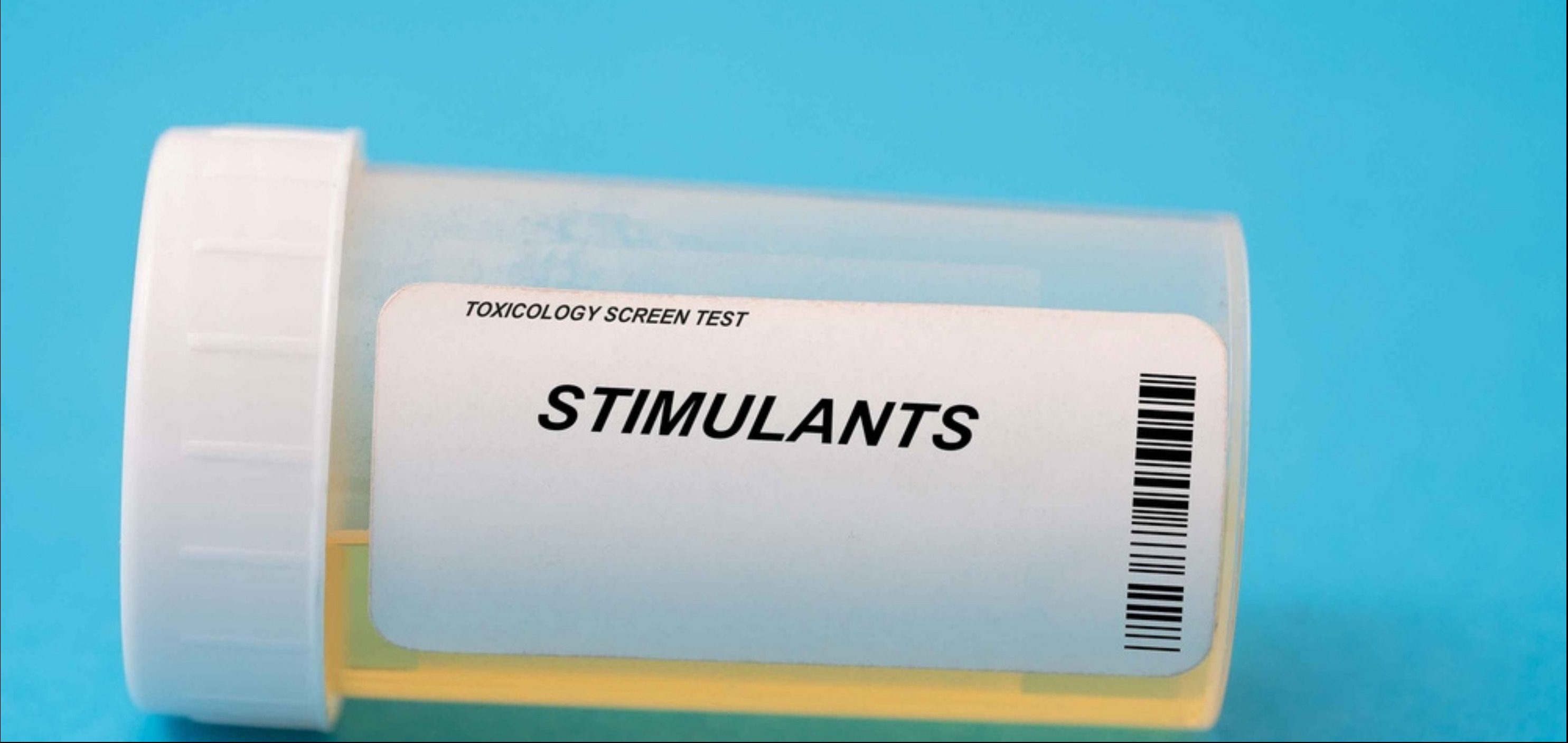
Stimulants can boost mood, sharpen focus and build confidence. They also play a legitimate role in treating conditions like ADHD. Whether illicit, such as cocaine, or prescribed, like amphetamines, the initial effects can feel overwhelmingly positive.
The difficulty is how quickly control can slip. What begins as a choice can turn into dependence, often without you fully recognising it. As tolerance builds, it becomes easier to justify continued use or believe you can stop at any time. In reality, the situation is often far more complex, and recognising that is the first real step towards regaining control.
Dopamine and the stimulant high
Cocaine, methamphetamine, MDMA, and a whole range of prescription stimulants work by flooding the brain with dopamine, the brain chemical associated with pleasure and motivation. Under normal circumstances, dopamine is released in response to things that matter, like food, sex, personal achievements and spending time with people you love. Stimulants bypass this system entirely, triggering a surge that dwarfs anything ordinary experiences can produce.
Stimulants feel like they’re working because the part of your brain that responds to pleasure starts announcing loudly that something important is happening. A 2012 study found that people taking amphetamines believed they were performing better on mental tasks even when actual results showed little or no improvement. The drugs create a feeling of enhanced performance that doesn’t match reality, so while you may feel sharper and more productive, your actual output doesn’t improve. The illusion of control in stimulant addiction often begins here, in the difference between how capable you feel and how capable you actually are.
With repeated stimulant use, the brain adapts. One 2017 review found clear evidence that stimulant addiction produces lasting changes to dopamine activity, with both the release of dopamine and the brain’s sensitivity to it becoming dulled over time. That is why you stop using stimulants for pleasure or enhancement, and start using them just to maintain a kind of base level.
Functional stimulant addiction
One reason stimulant addiction can progress so far before anyone notices is that it really can look like success. Cocaine and other stimulant drugs let you work longer and push through exhaustion, even if the actual results may suffer. In high-pressure environments where it’s all about the grind or where there is a work-hard, play-hard culture, these qualities are valued.
The term “functional addiction” describes people who maintain jobs and relationships and outward respectability while privately dependent on a substance. With stimulants, this can go on for years as the drugs fuel performance, performance provides cover, and that allows the addiction to get worse.
This feeds self-deception, because if you’re still hitting targets and getting promoted, it’s easy to convince yourself that the drug isn’t a problem. You might even believe it’s the reason for your success. But functional addiction is still addiction, and the word “functional” is hiding what’s happening underneath. In many cases, relationships are fraying, health is deteriorating, and you may already know deep down that something is wrong. The facade still holds, but not forever.
Social reinforcement makes this harder to see. When your colleagues are using, too, when cocaine appears at every work event, your use looks normal because you’re surrounded by people doing the same thing. The mirror reflects nothing wrong, and friends who might otherwise notice something amiss are often using themselves, or drinking heavily enough that your habits don’t stand out against theirs.
In industries where stimulant use is common, from finance to hospitality, the culture itself provides cover, and stepping outside long enough to see it clearly becomes difficult.
How stimulant dependence develops
Stimulant dependence tends to creep in through a series of small compromises, each one feeling reasonable at the time.
It might start as occasional use, like a line at a party, or something to get through a deadline. Then you notice that certain situations feel easier with drugs, and you start to seek stimulants out rather than just accepting them when offered. Tolerance then builds, meaning you need more to achieve the same effect. At some point, you realise that the days without it feel flat or difficult when they didn’t before. Stimulant use then becomes the norm, and you don’t even think twice about the fact that you’re now doing it every day.
Dependence often develops without a clear moment of crossing over. You may still be telling yourself you could stop if you wanted to, but the idea of stopping has become more and more abstract. Meanwhile, you start organising more of your life around getting stimulants, only spending time with people who take drugs with you, and dedicating more time and money to them than you can really afford. This is when the illusion of control persists even though you have lost control completely.
Cocaine, amphetamines, and prescription misuse
In the UK, cocaine is by far the most commonly used stimulant. The proportion of people entering treatment for powder cocaine problems reached 20% in 2024-25, the highest ever recorded. Deaths involving cocaine have risen for 13 consecutive years and are now eleven times higher than they were in 2011. In 2024 alone, there were 1,279 deaths involving cocaine in England and Wales, making it the most deadly single substance.
Amphetamine use in the UK is lower than cocaine but carries its own risks, particularly around how long and intense the effects are. Because amphetamines stay in your system longer than cocaine, the comedown is often more drawn out, and the temptation to take more to avoid it can be too much.
Prescription stimulant dependence often develops a bit differently from illegal drugs. Medications like methylphenidate, which are prescribed for ADHD and other conditions, can be genuinely helpful when used as directed. But they’re also misused by people without ADHD to get high or who believe the drugs will improve their focus or productivity. The evidence for this is weaker than many people assume, and the risks of dependence are real. If you’re taking prescription stimulants without a prescription, or differently than prescribed, you are risking many of the same dangers as illegal stimulant use.
Signs of stimulant dependence
If you’re wondering whether your use has crossed into dependence, the wondering itself is usually meaningful. Most people who use stimulants occasionally don’t spend time thinking about whether they have a problem.
As well as what we have covered above, there are other signs too. You have started using stimulants alone, or in situations where you wouldn’t have a year ago. Your comedowns have become harder to get through without using more. You’re thinking about the next lot of drugs before you’ve finished this one. You have become secretive and started lying to people about what you’re up to.
Self-deception can be difficult to overcome, but take an honest look at yourself and your stimulant use. If you’re still not sure, speak to somebody you trust or get in touch with Liberty House Clinic. When addiction denial has clouded your judgement, a frank conversation with a loved one or an addiction expert can help you see things more clearly.
Ready to talk?
If stimulant misuse has become part of your life, Liberty House can help you make sense of it and understand your stimulant addiction treatment options. You don’t need to have hit rock bottom or be certain there’s a problem, sometimes that uncertainty is reason enough to reach out.
Treatment works. The brain can recover, habits can change, and it’s entirely possible to feel focused, productive and confident without relying on stimulants. Liberty House has supported many people through this process. When you’re ready, we’re here to help you take the next step.
(Click here to see works cited)
- Ashok, Abhishekh H., et al. “Association of Stimulant Use With Dopaminergic Alterations in Users of Cocaine, Amphetamine, or Methamphetamine: A Systematic Review and Meta-analysis.” JAMA Psychiatry, vol. 74, no. 5, 2017, pp. 511–19. https://pmc.ncbi.nlm.nih.gov/articles/PMC5419581/
- Ilieva, Irena, et al. “Objective and Subjective Cognitive Enhancing Effects of Mixed Amphetamine Salts in Healthy People.” Neuropharmacology, vol. 64, 2013, pp. 496–505. https://pubmed.ncbi.nlm.nih.gov/22884611/
- Melemis, Steven. Quoted in “‘High-Functioning Addicts’: Intervening Before Trouble Hits.” Canadian Medical Association Journal, vol. 186, no. 1, 2014, p. E17. https://pmc.ncbi.nlm.nih.gov/articles/PMC3883816/
- Office for Health Improvement and Disparities. “Adult Substance Misuse Treatment Statistics 2024 to 2025: Report.” GOV.UK, 2025. https://www.gov.uk/government/statistics/substance-misuse-treatment-for-adults-statistics-2024-to-2025/adult-substance-misuse-treatment-statistics-2024-to-2025-report
- Office for National Statistics. “Deaths Related to Drug Poisoning in England and Wales: 2024 Registrations.” ONS, 2025. https://www.ons.gov.uk/peoplepopulationandcommunity/birthsdeathsandmarriages/deaths/bulletins/deathsrelatedtodrugpoisoninginenglandandwales/2024registrations